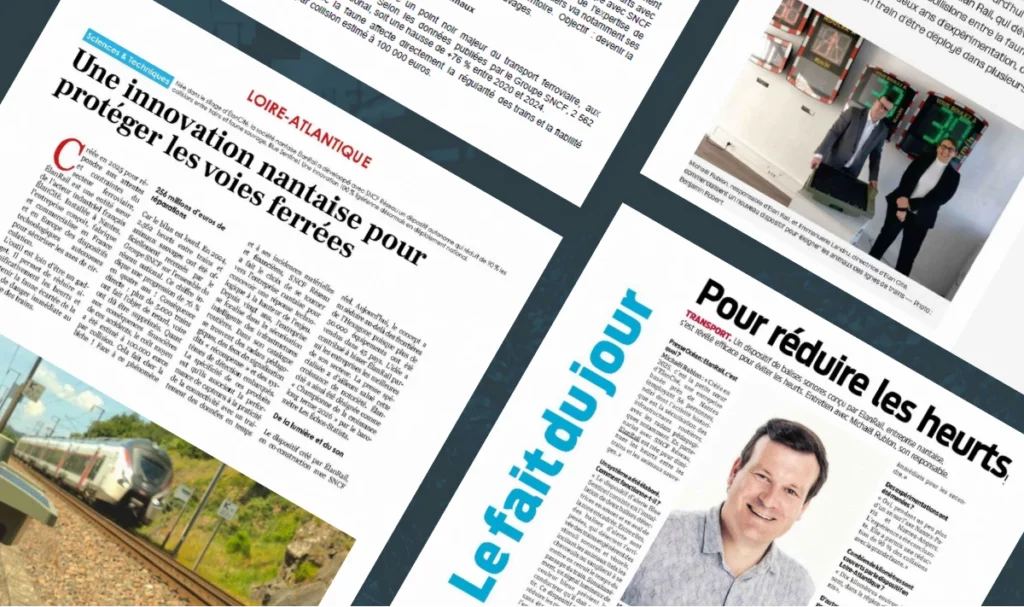
This visibility reflects the growing interest in railway safety and in the need for innovative solutions to address collisions between trains and wildlife.
Links to the online publications:
- Rail alert system against wildlife collisions | Le Rail
- Eco: a Nantes-based company behind a unique system
- SNCF tests a wildlife collision prevention system to protect wildlife
- After radar speed signs, a new traffic light drives this Nantes company's growth
- How beacons work to prevent collisions between wildlife and trains
Blue Sentinel: a key response to a railway challenge
Every outlet underlines the scale of the problem: in 2024, 2,562 strikes were recorded on the national network, a 76% increase in four years.The result: more than 5,000 trains delayed or cancelledat an average cost of €100,000 per collision.L'Écho de l'Ouest summed up the issue in a single line: “€100,000 per collision, 5,000 trains delayed or cancelled in a year: the cost of wildlife strikes is enormous.”
Beyond their impact on service reliability, these incidents represent a major environmental and societal challenge. Against this backdrop, the press highlights the need to move beyond traditional solutions and offer more agile systems that are better integrated into natural habitats.
“Compared with other solutions such as fences, Blue Sentinel is designed to be less invasive: it does not fragment wildlife habitats and also requires less maintenance.”
Journal des Entreprises – Pays de la Loire, 9 March 2026
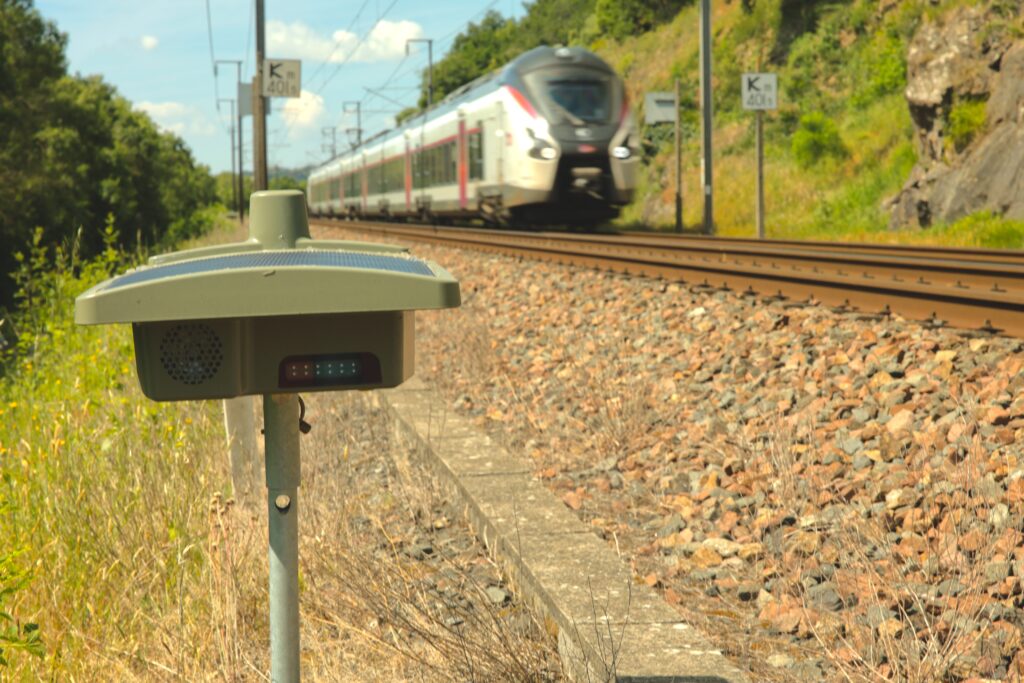
The media present Blue Sentinel as the innovative, field-ready wildlife collision prevention system designed specifically for the constraints of the railway environment. The press highlights its main features:
- solar-powered, self-sufficient beacons;
- the system's ability to detect approaching trains and generate audio and light signals;
- quick installation: two to three days to equip five kilometres,with no civil works required and no electrical connection;
- signals specifically tailored to animal perception: the lights are blue, because mammals such as wild boar and deer cannot perceive the colour red;
- a non-invasive solution that fosters peaceful coexistence between railway infrastructure and wildlife.
Field results widely praised
Pilot feedback takes centre stage in the articles devoted to ElanRail. After 18 months of testing in 2024 on the Nantes–Angers corridor, the results are unequivocal: a 90% reduction in wildlife collisions, and more than 50,000 trains protected. At the Oudon site, zero collisions were recorded, compared with four the previous year; at the Briollay site, a single strike, compared with seven in 2023.
Results acknowledged by SNCF itself:
“In the sections where it has been trialled, this system has brought the average down from ten strikes to one. It is relevant and effective.”
Frédéric Etève, Regional Director, SNCF Bretagne–Pays de la Loire
This level of performance is a key credibility factor, reassuring rail stakeholders as they move towards operational deployment. Blue Sentinel is now in its commercial phase, deployed across more than five regions in France.
Media visibility serving a clear ambition
Since its creation, ElanRail has drawn on the industrial expertise developed by ElanCity, its parent company and a leader in radar speed signs, with 60,000 products deployed in 45 countries and 14% growth in 2025.
“Given that a collision with a wild boar costs SNCF an average of €100,000, the return on investment is very quick.”
Emmanuelle Landru, Managing Director, ElanRail
ElanRail and ElanCity are now combining their strengths in service of a single ambition: securing mobility infrastructure through prevention, in France and internationally. With 260,000 km of railway tracks in Europe, the journey is only just beginning.